
Guide Bars and snack cakes
8 x 8 pan to 9 x 13 pan
Convert an 8 x 8 recipe to a 9 x 13 pan, learn why the exact scale is 1.83x, and when doubling is close enough.
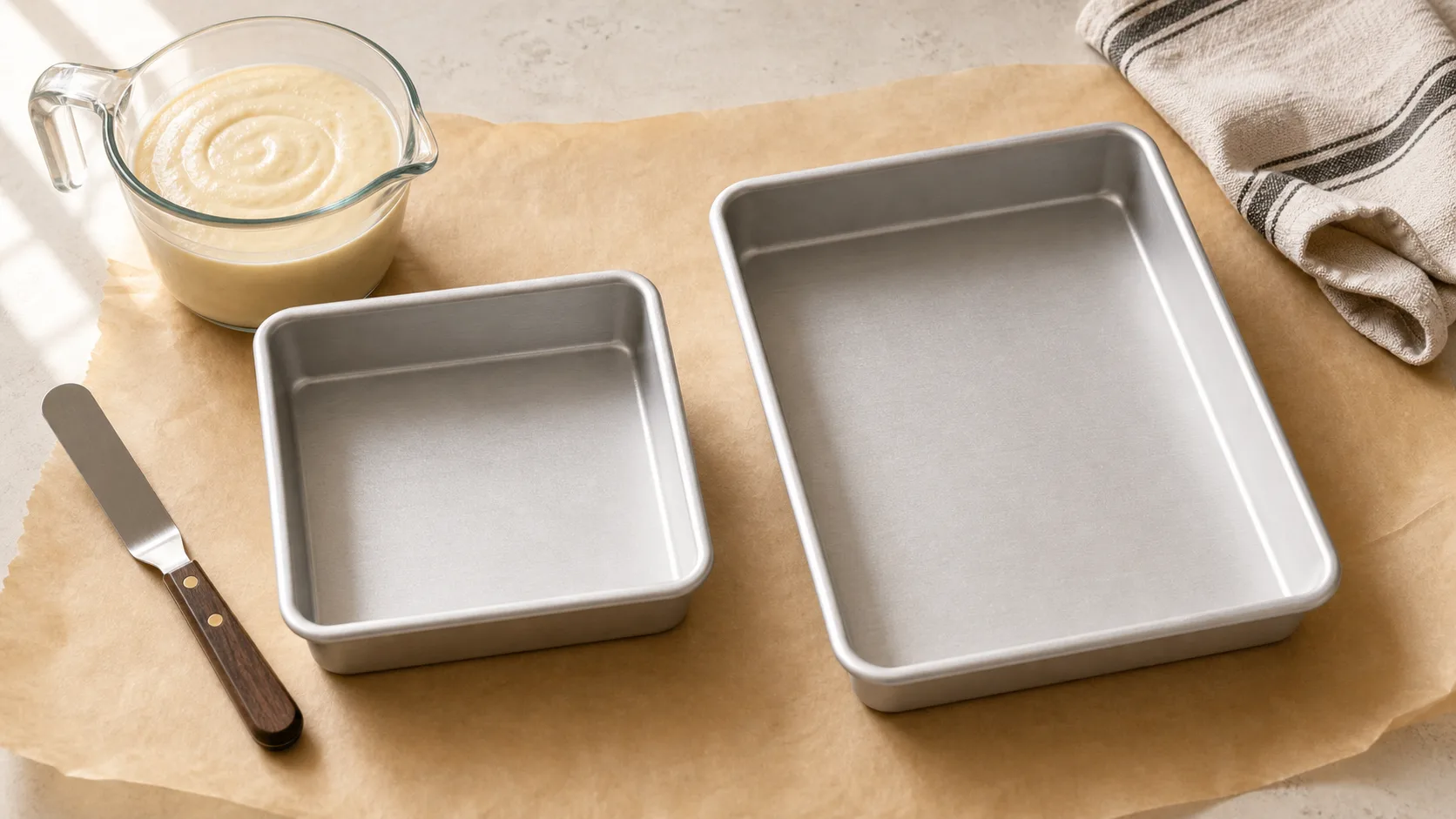
Quick answer
To keep the same batter height, scale an 8 x 8 recipe by about 1.83x for a 9 x 13 pan. In real kitchens, many forgiving recipes such as brownies, bars, snack cakes, and coffee cakes can simply be doubled. Doubling makes the 9 x 13 version about 9% thicker than the exact conversion, which is usually manageable but may need a few extra minutes.
What this conversion means
This is the classic small-pan-to-family-pan conversion. The math says 1.83x, but real recipes often tempt bakers to simply double the batch because measuring 1.83x is awkward.
That shortcut can be reasonable for forgiving bars and brownies, but it is not identical. A double batch gives slightly more batter than a same-height conversion, so the center may need more time and the edges may set sooner than expected.
Calculator setup
- Original pan: square, 8 x 8 inches, 2-inch depth, 1 pan.
- Target pan: rectangle, 9 x 13 inches, 2-inch depth, 1 pan.
- Use Scale recipe for a same-height result. Use Keep batter if you want to see how thin one 8 x 8 batch would be in a 9 x 13 pan.
Step-by-step use
- Enter the original as an 8 x 8 square pan.
- Enter the target as a 9 x 13 rectangle.
- Read the scale result first. If you plan to double instead, switch your thinking to a slightly thicker bake.
- Before baking, look at the pan fill. If the batter looks high for the recipe style, reserve a small scoop.
Why the math works
An 8 x 8 pan has 64 square inches. A 9 x 13 pan has 117 square inches.
117 / 64 = 1.83. A true same-height conversion is therefore 1.83x. A doubled recipe gives slightly more batter than the 9 x 13 pan needs for the same height, so the bake will be a bit thicker.
Worked example
A brownie recipe written for an 8 x 8 pan has 64 square inches of base area. A 9 x 13 pan has 117 square inches, so a same-height conversion is 117 / 64, or 1.83x.
If the original uses 1 cup sugar, the exact same-height batch uses 1.83 cups. Most bakers would round that to a practical double batch for brownies, but they should expect a slightly thicker center and a longer bake than the exact conversion.
Ingredient and timing notes
For brownies, blondies, and crumb bars, a doubled batch often works because these recipes tolerate thickness. Expect a longer bake and check the center with a skewer, not only the edges.
For cakes and coffee cakes, topping distribution matters. A streusel or fruit layer that looked balanced in an 8 x 8 pan can become too heavy or too sparse if you scale batter and topping differently.
Fill and doneness risks
- For brownies and bars, a slightly thicker doubled batch often works well, but the center may need more time.
- For cake, quick bread, or coffee cake with a crumb topping, check the center carefully and tent loosely if the top browns before the middle is set.
- If the recipe already rises high in an 8 x 8 pan, use 1.83x instead of a full double or hold back a small amount of batter.
Common mistakes
- Assuming 9 x 13 is exactly double 8 x 8.
- Doubling the batter but forgetting to double or adjust the topping.
- Leaving the oven time unchanged even though the center is thicker.
Before you bake
- Decide whether exact height or easy doubling matters more for the recipe.
- Scale toppings, swirls, and crumb layers with the batter.
- Use the center, not the edges, as the doneness reference.
- Let bars cool fully before judging whether the center is underbaked.
When not to use this shortcut
Do not double automatically for delicate sponge cakes, recipes with a fragile meringue structure, or recipes where the topping-to-batter ratio matters, such as fruit buckle, cheesecake bars, or layered caramel bars.