
Guide Half batches
Half 9 x 13 recipe in a 9-inch round
Find out whether half of a 9 x 13 cake recipe fits a 9-inch round pan, with the exact 0.54x ratio and practical half-batch advice.
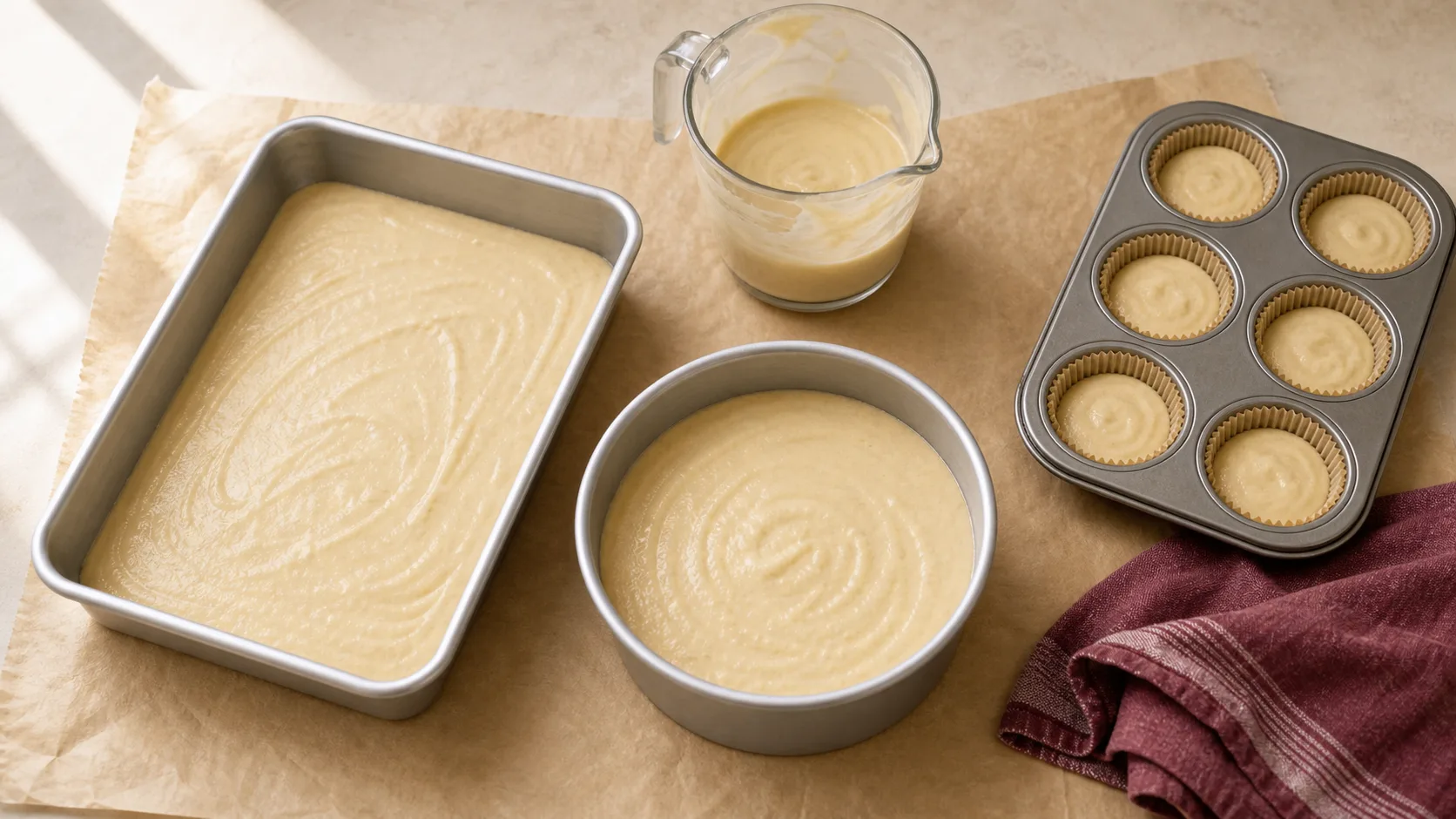
Quick answer
Half of a 9 x 13 recipe is usually a good fit for one 9-inch round pan. The exact same-height scale is about 0.54x of the full 9 x 13 recipe. A true half batch, or 0.50x, will be slightly thinner but close enough for many cakes, brownies, and snack cakes.
What this conversion means
This conversion is useful when you want a smaller dessert without committing to a full pan. A 9-inch round is just a little larger than half of a 9 x 13 pan, so a half batch usually lands in a comfortable range.
The important detail is that half batch and exact same-height batch are close, not identical. The exact number is about 0.54x, while a practical half recipe is 0.50x. That makes the layer a touch thinner.
Calculator setup
- Original pan: rectangle, 9 x 13 inches, 2-inch depth, 1 pan.
- Target pan: round, 9-inch diameter, 2-inch depth, 1 pan.
- The calculator should show about 0.54x for matching the original height.
Step-by-step use
- Enter the full recipe pan as one 9 x 13 rectangle.
- Enter the target as one 9-inch round.
- Use the calculator's scale result if you want precision, or use a clean half batch for convenience.
- If the recipe uses odd eggs, beat the egg and measure the needed half rather than guessing from the shell.
Why the math works
A 9 x 13 pan has 117 square inches of surface area. Half of that is 58.5 square inches. A 9-inch round pan has about 63.6 square inches.
63.6 / 117 = 0.54, so one 9-inch round is about 54% of a 9 x 13 pan. A half recipe is about 8% less batter than a perfect same-height conversion.
Worked example
A full 9 x 13 recipe maps to about 0.54 of the recipe for one 9-inch round. If the recipe calls for 2 cups flour, the exact 9-inch-round amount is about 1.08 cups flour, while a simple half batch uses 1 cup.
That small gap is usually acceptable for casual cakes because the half batch simply bakes a little thinner. If the cake needs to be split, filled, or displayed as a taller layer, use the 0.54x number instead of a rough half.
Ingredient and timing notes
A half batch in a 9-inch round may finish earlier than the original 9 x 13 bake. Start checking early and look for the recipe's doneness cues.
If the recipe includes mix-ins, spread them evenly after scaling. A few extra berries, nuts, or chocolate chunks can have a bigger effect in a smaller cake than they did in the full pan.
Fill and doneness risks
- Because a half batch in a 9-inch round is slightly thinner, begin checking earlier than the 9 x 13 recipe's bake time.
- For odd ingredient amounts, especially eggs, beat the egg first and weigh or measure the portion rather than guessing.
Common mistakes
- Halving the batter but leaving a full amount of topping or syrup.
- Using a very shallow pie plate instead of a cake pan without checking depth.
- Expecting the half batch to slice like a tall layer cake.
Before you bake
- Halve frosting separately based on how you plan to serve the cake.
- Beat and measure partial eggs instead of guessing.
- Use the same pan material when possible.
- Start checking before the original 9 x 13 bake window.
When not to use this shortcut
Avoid this conversion for cakes that must be split into multiple layers, recipes with large mix-ins that need a minimum depth, or desserts that depend on the 9 x 13 serving format.