
Guide Depth
Cake pan depth: 2-inch vs 3-inch
See how 2-inch and 3-inch cake pans change batter capacity, fill risk, bake time, and when a converter should switch from area to volume checks.
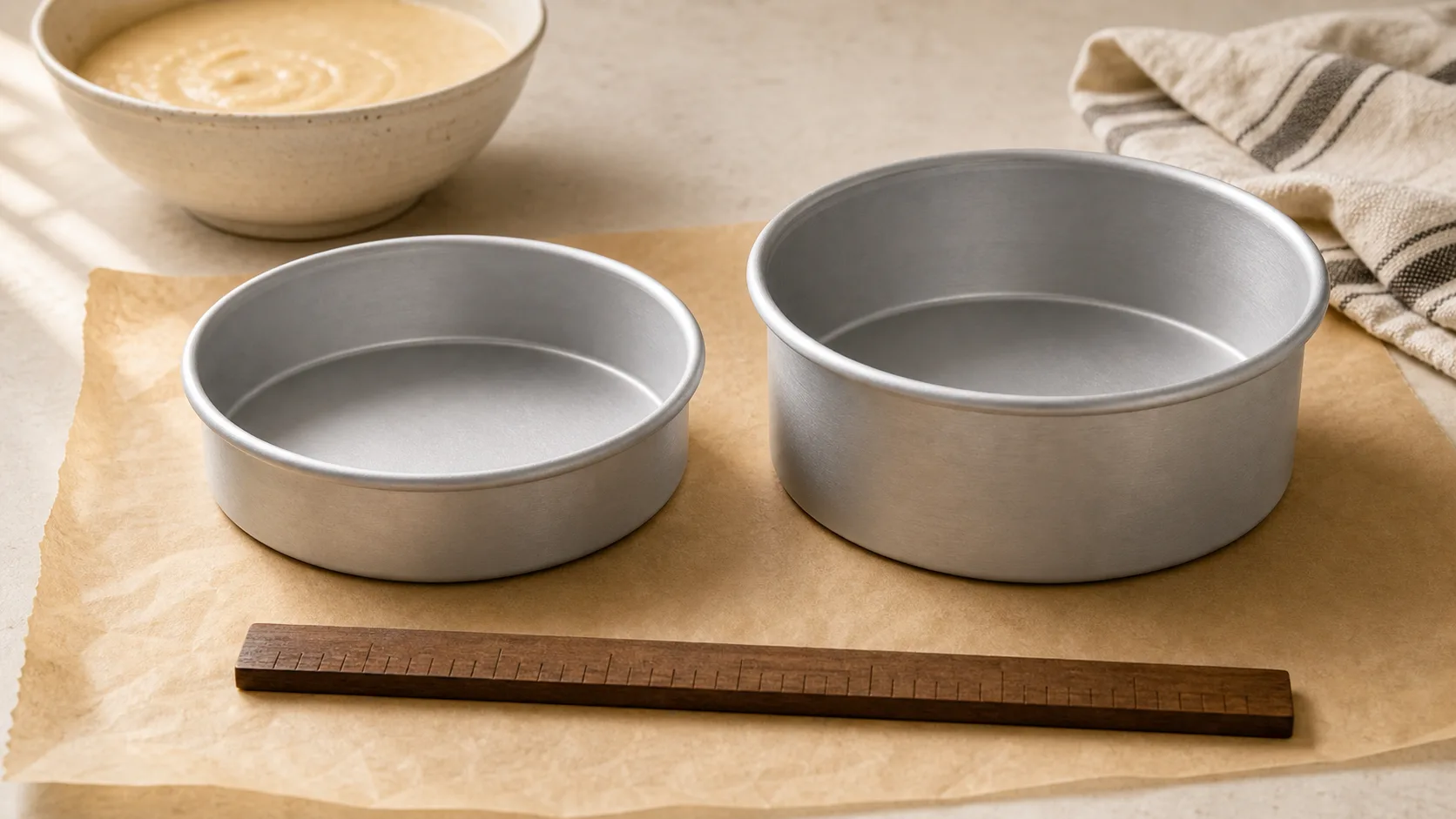
Quick answer
A 3-inch-deep pan of the same diameter has about 50% more full volume than a 2-inch-deep pan, but that does not mean you should automatically add 50% more batter. Use area to preserve layer height; use depth to judge fill safety.
What this conversion means
Depth is not a recipe multiplier by itself. A 3-inch pan gives more room, but it also changes the cake's thickness if you add more batter.
The safest use of a deeper pan is often overflow protection, not automatic enlargement. If you intentionally bake taller, you are changing the bake style and should adjust expectations.
Calculator setup
- If you want the same layer height, enter both pans and use Scale recipe. Let area control the recipe multiplier.
- If you want a taller single cake in a 3-inch pan, use Keep batter first to see how the original recipe fills the deeper pan.
- If you intentionally increase batter, keep the fill level conservative and plan for longer baking.
Step-by-step use
- Enter the same diameter with the real target depth.
- Use Scale recipe if you want the same batter height as the original.
- Use Keep batter if you want to see how the original recipe sits in the deeper pan.
- Only increase batter if the recipe type can handle a taller bake.
Why the math works
Depth does not change pan area. It changes capacity and heat distance. For the same diameter, 2-inch full volume is area x 2, and 3-inch full volume is area x 3.
The capacity ratio is 3 / 2 = 1.5. That ratio is useful for understanding physical space, but it is not a universal recipe multiplier because the batter column becomes 50% taller.
Worked example
An 8-inch round pan has the same footprint whether it is 2 inches deep or 3 inches deep. If you put the same batter amount into both pans, the batter height is the same; the deeper pan simply has more empty space above it.
If you add 50% more batter because the pan is 50% deeper, you create a taller cake, not a same-height conversion. That can work for sturdy batters, but it requires a different bake strategy.
Ingredient and timing notes
A taller cake may need more time, gentler heat, or a heating core for very large formats. The calculator can warn about fill, but it cannot guarantee the center will set at the same pace.
If you need height for decorating, consider baking separate layers instead of one deep layer. Separate layers are easier to bake evenly and easier to level.
Fill and doneness risks
- A deeper cake can have a wet center with browned edges, a tall dome, cracking, or structural collapse if the center sets too late.
- For deeper cakes, start with a lower-risk fill level and consider an internal temperature check for dense cakes.
Common mistakes
- Adding 50% more batter just because the pan is 50% deeper.
- Using a deep pan to replace multiple shallow layers without changing bake strategy.
- Judging doneness only from the top surface.
Before you bake
- Use the deeper pan as extra headroom unless you intentionally want a taller cake.
- Do not assume more capacity means the same bake time.
- Check the center with a long tester for tall cakes.
- Consider multiple shallow layers for more predictable results.
When not to use this shortcut
Do not use a 3-inch pan as a simple substitute for two 2-inch layers when the cake is delicate, foam-based, high-rising, or intended to bake quickly. For Bundt, tube, or novelty pans, measure capacity and follow pan-specific guidance.