
Guide Springform
Springform pan substitutions
Use area, depth, and leak-risk checks when substituting springform pans for round cake pans or changing 8 x 3 and 9 x 2 sizes.
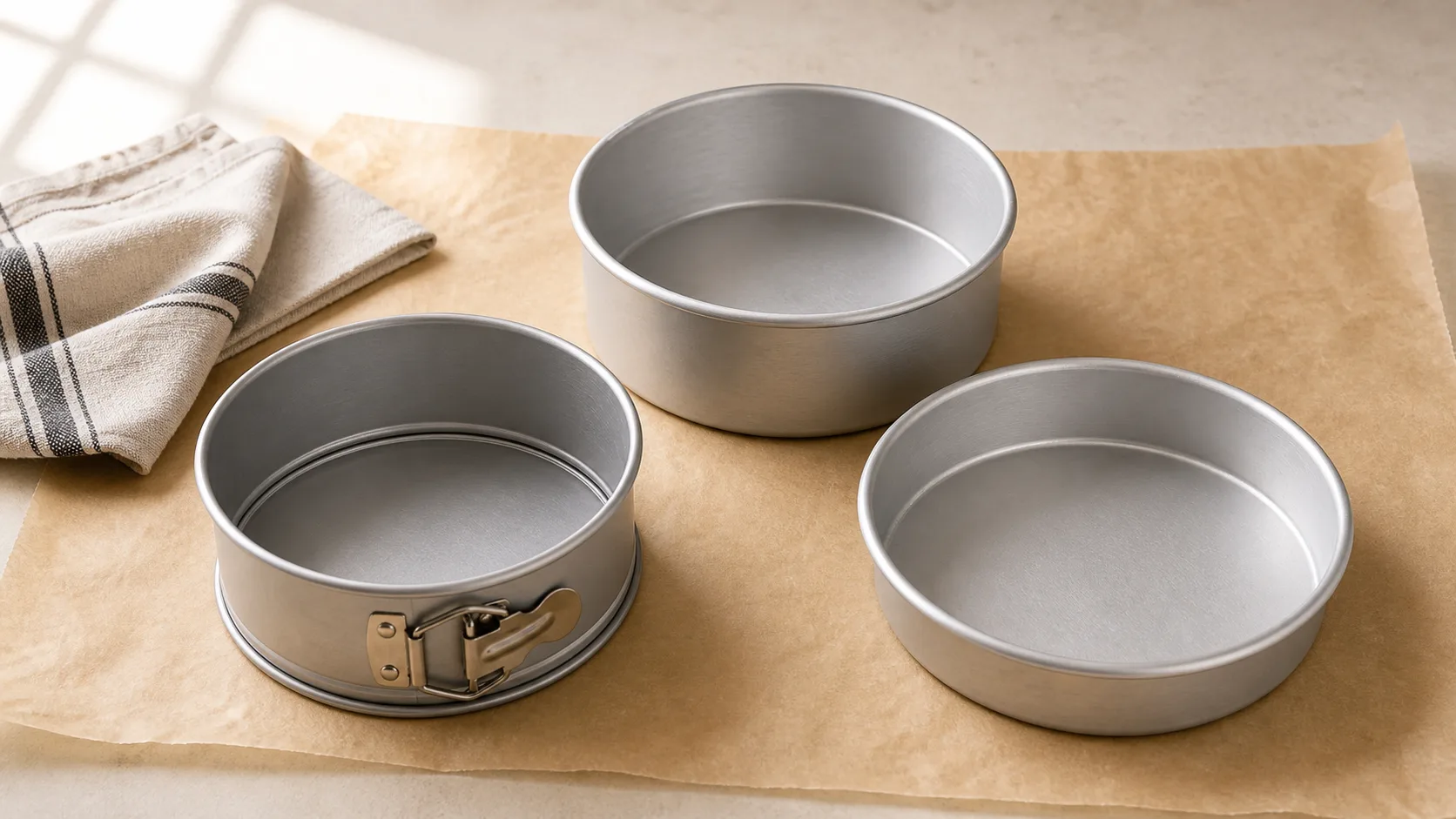
Quick answer
A 9-inch springform and a 9-inch round pan have the same footprint if their inside diameters match. But springform substitutions also need a depth check, a leak check, and recipe-specific caution, especially for cheesecake. For a 9 x 2 recipe moved to an 8 x 3 pan, the same batter becomes about 27% deeper even though the 8 x 3 pan may physically hold it.
What this conversion means
Springform pans are convenient because the sides release, but the latch and removable base add two issues ordinary round pans do not have: leaks and crust or batter support.
For regular cake batter, you can often treat a springform as a round pan if the inside diameter and depth match. For cheesecake or very loose batters, the pan is part of the recipe method, not just a container.
Calculator setup
- For regular cake: enter the springform as a round pan with its inside diameter and depth.
- For cheesecake: use the calculator only as a capacity warning, then follow recipe-specific pan guidance.
- If moving a 9-inch round recipe into an 8-inch springform, use Keep batter first to see the deeper target fill.
Step-by-step use
- Measure the inside diameter and depth of the springform.
- Enter it as a round pan in the calculator for area and fill estimates.
- If using a water bath or thin batter, plan for leak protection before mixing.
- Use the result to decide whether to scale, hold back batter, or choose a wider pan.
Why the math works
A 9-inch round footprint is about 63.6 square inches. An 8-inch round footprint is about 50.3 square inches. Keeping the same batter while moving from 9 inches to 8 inches makes the batter height 63.6 / 50.3 = 1.27x as deep.
An 8 x 3 pan has more full capacity than an 8 x 2 pan, but that extra depth does not erase the bake-time change. A deeper cake or cheesecake sets differently than a wider, shallower one.
Worked example
Moving a 9-inch round cake recipe into an 8-inch springform makes the batter about 27% deeper if you keep the full amount. The taller sides may physically hold it, but the center still has more cake to set.
For regular cake, the conversion may be acceptable with a longer bake and careful checking. For cheesecake, the same move affects crust height, water bath behavior, cooling, and final texture, so the calculator should be treated as a warning tool.
Ingredient and timing notes
A move from 9 inches to 8 inches makes the same batter noticeably deeper. Even when the taller 8-inch pan can hold the batter, the center may need more time and gentler heat.
For cheesecake, avoid chasing a simple area match. Crust height, water bath, oven temperature, cooling method, and final set are all part of whether the substitution works.
Fill and doneness risks
- Springform pans can leak, especially with thin batter or water baths. Wrap and place on a tray when the recipe calls for it.
- Cheesecake is more about gentle heat, depth, and setting than ordinary cake area. A mathematically close pan can still crack, overbrown, or set unevenly.
Common mistakes
- Trusting the latch to hold thin batter without a tray or wrap.
- Using a deeper springform as permission to make a much taller cake.
- Treating cheesecake like standard butter cake for bake-time decisions.
Before you bake
- Check latch fit before pouring thin batter.
- Use a tray or wrap when leaks would be costly.
- Treat cheesecake as a recipe-specific format.
- Let deeper springform bakes cool gradually before unmolding.
When not to use this shortcut
Do not use springform math alone for cheesecake, mousse cakes, icebox cakes, or very liquid batters. If release, water bath, or crust height is central to the recipe, follow the recipe's pan guidance first.