
Guide Capacity
Cake pan capacity vs area
Understand when to scale cake batter by pan area, when to check pan capacity, and why cup volume alone can mislead a pan conversion.
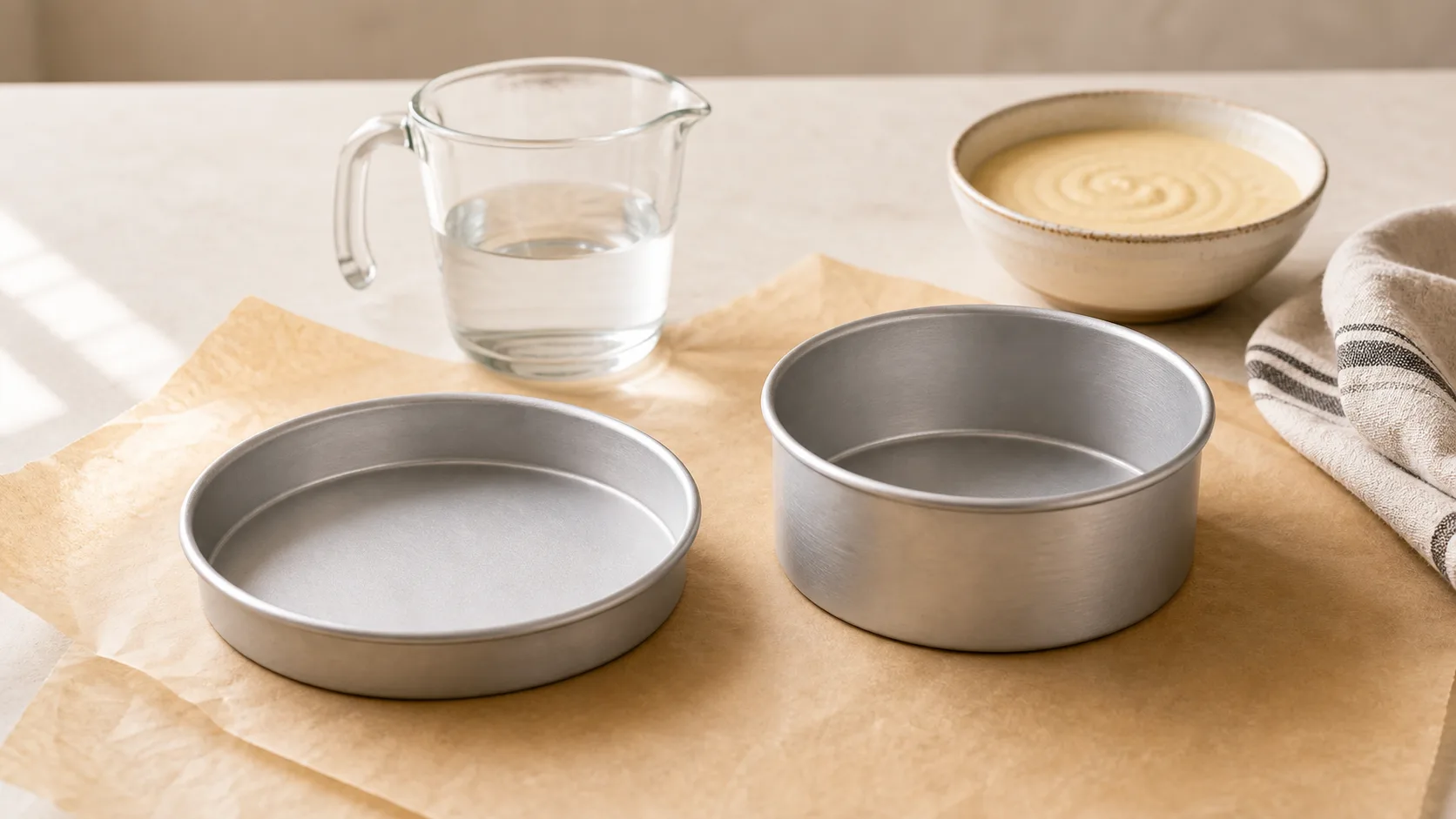
Quick answer
Use pan area when you want the same batter height in a similar-depth pan. Use pan capacity when shape or depth changes enough that overflow becomes the main question. A useful cake pan converter needs both.
What this conversion means
Area and capacity answer different questions. Area tells you how much batter keeps a similar height. Capacity tells you whether the target pan has enough physical room, including space for rise.
A reliable conversion checks both. If you only look at capacity, the cake may fit but bake too deep. If you only look at area, the pan may match height but overflow because it is too shallow.
Calculator setup
- Compare footprint area to find the same-height recipe scale.
- Check the target fill level against the target pan depth.
- If you know the pan's real capacity, measure it with water and use the calculator's fill gauge as a safety estimate rather than a promise.
Step-by-step use
- Start with area to estimate the ingredient multiplier.
- Check the target pan depth and fill level.
- For unusual pans, measure usable capacity with water before mixing batter.
- Leave rise space. Do not treat brim-full water capacity as a cake batter target.
Why the math works
Area is the bottom footprint: round area is pi x radius^2, and rectangle area is length x width. Estimated full volume is footprint area x depth.
A cake should not usually be baked at full physical capacity. A pan filled to the brim with water tells you maximum capacity, not safe cake batter capacity.
Recipe conversions often work better when you preserve batter height first, then use capacity as the safety check.
Worked example
Imagine two pans that both hold about 8 cups when filled with water. One might be wide and shallow; the other might be narrow and deep. The same batter amount can bake as two very different cakes in those pans.
That is why the calculator separates the ratio from the fill warning. The area ratio tells you how much batter preserves height. The depth and fill estimate tell you whether the target pan is likely to overflow or bake too deep.
Ingredient and timing notes
A deep pan can make a conversion look safe while creating a new baking problem. More depth means the center takes longer to set, and that can lead to dry edges.
A shallow pan can have the opposite problem: the batter may be the right area ratio but still sit too close to the rim. In that case, divide the batter or bake extra as cupcakes.
Fill and doneness risks
- A 3-inch pan may hold more batter, but a deeper batter column takes longer to set in the middle.
- Bundt or tube pans can overflow through the center opening or brown faster because of heavy decorative metal.
- Two pans can hold the same number of cups but produce different cake thickness because their footprints differ.
Common mistakes
- Scaling a layer cake by cup capacity alone.
- Ignoring depth when moving into loaf, Bundt, tube, or springform pans.
- Filling a pan near the rim because it technically holds the cold batter.
Before you bake
- Use area for layer height decisions.
- Use capacity for overflow decisions.
- Measure unusual pans with water before mixing batter.
- Never use brim-full capacity as the planned batter amount.
When not to use this shortcut
Do not use capacity alone to scale a layer cake if you care about layer height. Do not use area alone for Bundt pans, tube pans, novelty pans, or deep loaf pans. Measure odd pans with water and leave generous rise space.