
Guide Small cakes
6-inch to 8-inch cake pan
Scale a 6-inch cake recipe to an 8-inch pan, or reduce an 8-inch cake to 6-inch layers, using area ratios and fill checks.
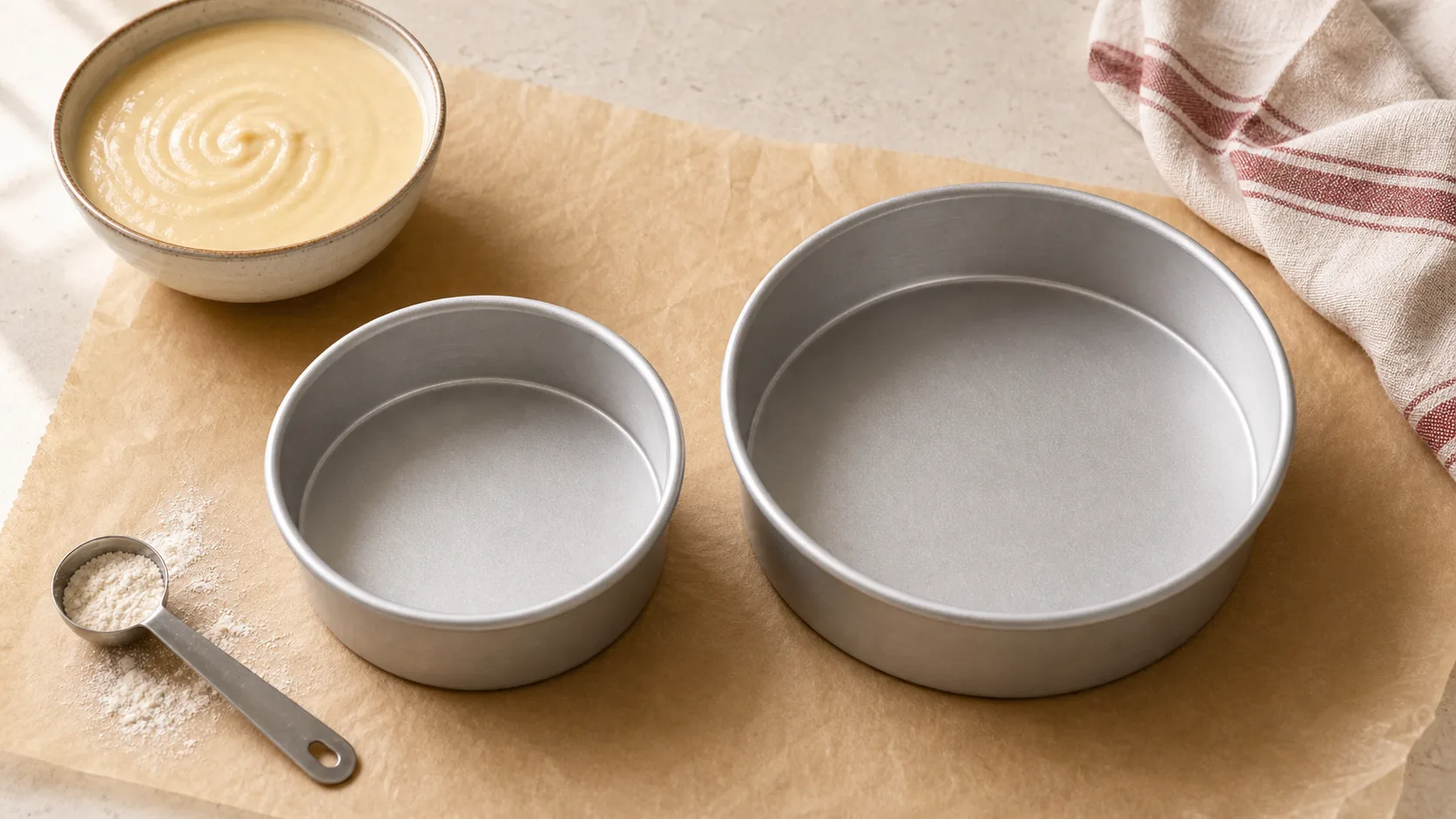
Quick answer
To scale one 6-inch round cake layer to one 8-inch round, multiply by about 1.78. To scale one 8-inch round down to one 6-inch round, use about 0.56x. If the layer count changes too, multiply the area by the number of pans before comparing.
What this conversion means
Small cake conversions feel simple until eggs, leavening, and layer count get involved. The area jump from 6 inches to 8 inches is large enough that a casual guess usually shows in the final height.
This conversion is useful for scaling small celebration cakes, testing a recipe in a bigger pan, or shrinking an 8-inch recipe for a smaller household.
Calculator setup
- Original pan: round, 6-inch diameter, 2-inch depth, 1 pan.
- Target pan: round, 8-inch diameter, 2-inch depth, 1 pan.
- For a layer cake, set the actual number of pans on each side before reading the ratio.
Step-by-step use
- Set the original and target diameters accurately.
- Set layer count on both sides before reading the multiplier.
- If scaling down, weigh ingredients where possible because small rounding errors are more visible.
- Check pan fill after mixing, especially if the original recipe makes tall 6-inch layers.
Why the math works
A 6-inch round pan has radius 3 inches and area about 28.3 square inches. An 8-inch round pan has radius 4 inches and area about 50.3 square inches.
50.3 / 28.3 = 1.78. The reverse is 28.3 / 50.3 = 0.56. Two 6-inch rounds total about 56.5 square inches, which is closer to one 8-inch round than many bakers expect.
Worked example
A two-layer 6-inch cake has a combined footprint of about 56.5 square inches. One 8-inch round has about 50.3 square inches, so those two formats are closer than one 6-inch layer to one 8-inch layer.
This is why layer count matters. If you forget to set the number of pans, you may scale a small cake far too much or far too little for the target format.
Ingredient and timing notes
A 6-inch cake often has different decorating goals than an 8-inch cake. If you are scaling for a layer cake, think about final height, filling thickness, and whether you need two layers or three.
When scaling down, leavening and salt can become awkward fractions. Round gently and write down the result so the recipe can be repeated.
Fill and doneness risks
- Small cakes expose scaling problems quickly. Half eggs, tiny leavening changes, and pan fill can shift texture.
- If reducing a recipe, weigh ingredients when possible. If scaling up, make sure the target pans are not above about two-thirds full.
Common mistakes
- Scaling only one layer when the recipe makes multiple layers.
- Rounding small ingredient amounts too aggressively.
- Using the ratio for mousse or cheesecake styles that rely on exact pan height.
Before you bake
- Set layer count before reading the result.
- Use weight for partial eggs and small leavening amounts.
- Check whether the target cake needs the same final height.
- Avoid aggressive rounding in very small batches.
When not to use this shortcut
Do not use the ratio blindly for mini cheesecakes, mousse cakes, or very tall 6-inch cakes designed for special stacking. Those recipes often depend on exact chilling, structure, or pan height.